Introduction to Archives
The history of archives is a fascinating journey that traces the evolution of record-keeping from ancient civilizations to the digital age. This article explores the development and transformation of archives, examining their changing roles, societal impact, and the ongoing importance of digital transformation. The scope covers the origins of archives in antiquity, their institutionalization in medieval and modern times, and their current state as complex digital ecosystems.
This resource is designed for researchers and general readers interested in archival history. Understanding the history of archives is essential for appreciating their role in preserving collective memory, societal values, and the narratives that shape our understanding of the past. Archives are not just repositories of documents; they are reflections of power, culture, and the ongoing dialogue about whose stories are preserved and remembered.
The term “archive” comes from the Greek archeion, the office of the magistrate. Today, archives encompass a wide array of institutions, from national archives and federal records centers to renowned university libraries like the Cambridge University Library. These repositories play a crucial role in preserving history, ensuring that the documents, records, and artifacts that shape our understanding of the past remain accessible for historical research and public inquiry.
The importance of archives extends beyond mere storage; they are vital for record keeping, supporting transparency, accountability, and the continuity of knowledge across generations. Government archives safeguard the administrative and legal records of nations, while religious archives protect sacred texts and artifacts central to faith communities. Corporate archives such as those at Soutron clients the National Association of REALTORS (NAR) and Rochester Electronics, document company IP and brand history, while institutional archives—such as those found in universities such as Soutron clients Frostburg State University and St Edmund Hall, University of Oxford in the UK, capture the academic and cultural achievements of their communities. Each type of archive holds unique collections that illuminate different facets of history, society, and human endeavor, underscoring the indispensable role of archives in preserving our shared heritage.
History of Archives: Archives of Antiquity

Ancient Archives
Historian Ernst Posner theorized that the Sumerians created the first archives between 4000 BC and 3000 BCE, using clay tablets for record-keeping. Archives in China are believed to be nearly as old, with data storage mediums such as inscribed tortoise shells and bones. These literal hard-copy documents held religious and administrative information.
By 700 BC, ancient societies such as the Egyptians and Chinese had established archival institutions, using stone, silk, or bamboo-based tablets to store military and administrative records in secure buildings, including what at the time would have been considered classified military documents.
Greek and Roman Archives
The Greek city-state of Athens established its archives in the Metroon temple around 400 BC, which included laws, decrees, and records of court proceedings, allowing public access to these documents. The archival purpose was essentially the same for the Greeks as it is for us today, storing everything from plays written by Sophocles and Euripides to meeting minutes, contracts, and financial records.
The first public archives in Rome, known as the Aerarium, was founded around 509 BC and housed laws, decrees, and financial records accessible to citizens.
Medieval and Early Modern Archives
During the medieval period, many European archives were maintained in ecclesiastical settings, with the first papal archives established by the sixth century.
In fact, the word archive can be traced back to the Greek word archeion, or the office of the archon–a magistrate that stored records. The Latin word archivum also denoted the residence of the magistrate and the location of legal and administrative records.
Modern Archival Institutions
Today, major archival institutions such as the British Library serve as repositories for rare books, manuscripts, and scientific collections, supporting research into the history of science and collecting, especially during periods like early modern England. The nature of archival materials encompasses documentation of significant events and serves as a subject for research, reflecting the diversity and depth of historical records.
All this—the creation, establishment, and evolution of archival institutions and state archives—demonstrates the interplay of political power, societal values, and the non-neutral nature of archives. Archives serve as reflections of who holds authority to document history, whose narratives are preserved or marginalized, and how events are recorded and remembered.
As archives evolved over centuries, their role and structure adapted to new societal needs, leading to the development of modern archival institutions.
Modern Archives
The United States National Archives and Federal Records Centers
Franklin Delano Roosevelt’s legacy is full of impactful contributions to U.S. history. With so many lasting legacies, people frequently forget–or simply never learn–that FDR signed the legislation that officially founded the U.S. National Archives. The U.S. National Archives (NARA) was established in 1934 to consolidate federal records that had previously been scattered in insecure locations.
Although FDR didn’t originate the idea, he was the president who urged legislators to get the National Archives bill written and ultimately shepherded it across the finish line.
The National Archives plays a complex role as a social, cultural and governmental store of classified and public records. Its mission is to preserve and safeguard the nation’s historical documents and records. American archivists play a crucial role in managing and preserving these records, ensuring their longevity and continued significance as part of the national memory and cultural heritage. The building most frequently associated with the National Archives is the original National Archives building in Washington, D.C., but that structure is just the headquarters of a nationwide network of facilities that include federal records centers, regional archives and presidential libraries.
Digital Archives Projects at the U.S. National Archives
Digitization is an ongoing process at the National Archives. Modern archives now focus on digital preservation, managing potentially unstable electronic records, and increasing accessibility through online catalogs. Advances in computing have allowed for immediate access to archives worldwide, breaking the accessibility gap. Computational Archival Science (CAS) has emerged to address the challenges of preserving big data and uses AI to analyze digital datasets. Through digitization, archives help preserve the personal histories and experiences that document individual and collective life, ensuring these records remain accessible for future generations.
The National Archives and Records Administration previously drafted a 2018 – 2022 strategic plan that set a target date for digitizing 500 million pages of records by October 1, 2024. That plan has been updated in NARA’s strategic plan 2022-2026, where NARA has committed to digitize 500 million pages of records and make them available online to the public through the National Archives Catalog by September 30, 2026. It is hoped the goal will be accomplished by integrating archive digitization projects into the responsibilities of existing archival staffing units nationwide and through third-party digitization partnerships for specific archival collections that have been earmarked for digitization.
The National Archives (TNA) UK
Some of the founding documents stored in the U.S. National Archives are practically new compared to the UK’s National Archives, which contains some national documents dating back more than 1,000 years. The entity known as the National Archives (TNA) in the UK is younger than its U.S. counterpart, having been founded in 2003. It arose from the formal combination of four separate entities: the Public Record Office (PRO), the Historical Manuscripts Commission, the Office of Public Sector Information (OPSI) and Her Majesty’s Stationery Office (HMSO).
After the creation of the Archives Nationales in 1789, which unified archival administration in France, the French Revolution marked a turning point by establishing the state’s responsibility for its documentary heritage and public access. The Manual for the Arrangement and Description of Archives, introduced in 1898, codified core concepts such as provenance and original order, shaping modern archival practice. Examples of archival organizations include:
- National archives
- Municipal archives
- Religious archives
- Specialized repositories managed by NGOs or foundations
The parent department of the TNA is the Department for Digital, Culture, Media and Sport. The TNA also boasts an impressive collection of digitized records that can be browsed through discovery.nationalarchives.gov.uk.
As modern archives continue to expand their digital reach, the tools and methods for managing these vast collections have also evolved.
How Archive Management Software Changed Archiving
On a fundamental level, there was little difference between the Metroon temple archives and the archives of the 20th century. Physical records were stored and safeguarded. Archives have evolved from simple administrative tools in ancient civilizations to complex digital ecosystems today, reflecting advances in technology and information management.
Archival theory coalesced around the principle of respect des fonds, which maintains that records from a single source should be kept together and in their original order. Archive collections can be defined as either material with a common provenance, or ‘fonds’, or as artificial collections. Collections with a common provenance are brought together organically by a person, family, or organization in the course of their activities, and the materials are often kept in the order in which they were stored by the individual(s) or organization who collected it. Artificial collections are where items have been brought together artificially because they bring together similar materials in a way that is useful for research, but do not have a common origin.
That is why it is said that archivists think in terms of ‘boxes’ when archiving collections. In contrast, hierarchical collections are assembled because they bring together similar materials in a way that is useful for research, but do not share a common origin.

As with nearly every other industry on the planet, computing and the internet changed archiving. Digitization and the ability to provide fast, immediate access to users around the world is a revolutionizing change in archiving.
Archive management systems have also been a boon for institutions themselves. Providing unfettered access to an archive allows more people to use it and find value in the information.
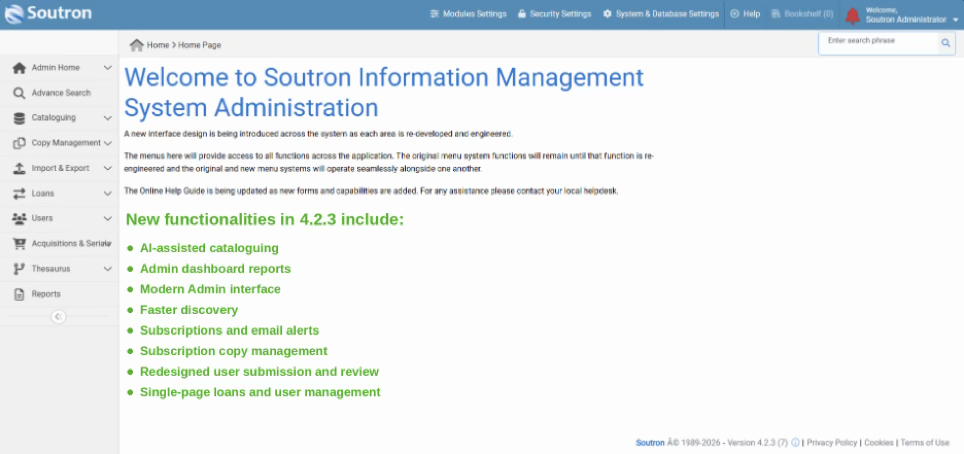
Archive management software has also revolutionized the way materials can be catalogued and searched. Archivists and librarians can customize metadata and set hierarchical relationships between entries, significantly improving the ease with which searchers can find relevant information while also adding depth and context to their archives.
As digital transformation continues, the types and formats of archival collections have expanded, making it essential to understand the diversity of materials preserved.
Learn more about Soutron archive management software solutions and digital preservation solutions:
- Soutron Global Archives Management
- Cultural Asset Management
- Trusted Digital Preservation Repository
The history explains why archives are arranged the way they are. Deciding what your own organization should keep, and how to order it, is a separate problem. Our white paper on setting up a business archive covers the practical decisions involved, from appraisal and arrangement through to who takes responsibility for the collection.
Types of Archive Collections
The world of archives is as diverse as the history it preserves. Archive collections range from ancient written records and manuscripts to modern photographs, audio recordings, and digital files. For example, the National Archives in the United States houses a vast array of historical records documenting the workings of government, while The London Archives, a Soutorn Gloabl client, and the Public Record Office in the UK safeguards public records and documents dating back to the early modern period. These collections often include:
- Administrative records
- Financial records
- Court proceedings
- Manuscripts
- Photographs
- Audio recordings
- Digital files
Each provides invaluable documentary evidence of how institutions and societies have functioned over time.
Archives are not limited to paper and ink. Many repositories now manage digital archives, offering online access to historical records and documents that were once only available through on-site visits. This digital transformation has made it easier for researchers, students, and the public to explore collections from anywhere in the world. Whether physical or digital, the careful preservation and management of these materials are essential to maintaining their integrity and ensuring their availability for future generations. By safeguarding everything from government documents to personal letters and photographs, archives provide a rich tapestry of evidence that supports research, legal processes, and the ongoing study of our collective past.
As the scope and complexity of archives have grown, so too have the challenges and strategies for preserving these invaluable resources.
Preserving the Past
Preserving the past is both an art and a science, requiring archivists and institutions to employ meticulous strategies to protect historical records and documents.
Physical Preservation Methods
The process begins with proper storage—often in climate-controlled environments designed to slow the deterioration of fragile materials. Key steps include:
- Storing documents in acid-free folders and boxes
- Maintaining stable temperature and humidity levels
- Limiting exposure to light and pollutants
- Regularly inspecting collections for signs of deterioration
Archivists must also organize and catalog collections, making it possible for researchers to locate and interpret documents efficiently. This careful stewardship is essential for maintaining the authenticity and reliability of archival materials.
Digital Preservation Challenges
The advent of digital archives has transformed archival practice, enabling the creation of online platforms that provide unprecedented access to historical records. However, this digital revolution brings new challenges, such as:
- Ensuring the long-term preservation of born-digital files
- Migrating data to new formats as technology evolves
- Protecting against data loss and cyber threats
- Addressing questions of canon formation—deciding which records are preserved and which are not
Trusted Digital Preservation Repository
Format obsolescence is an issue all archivists have to address.
Learn more about preservation strategies, standards and Soutron Global’s end-to-end, proven digital preservation solutions, and access where your organization stands when planning to extend digital preservation projects by filling out this 10 minute Digital Preservation Checklist, and then track your digital preservation progress using this handy Digital Preservation Scorecard.
Ethical Stewardship and Societal Impact
In the present day, there is increasing awareness of the crucial role that archives play in shaping our understanding of the world. Archivists are at the forefront of this effort, balancing the demands of preservation, access, and ethical stewardship. Archives serve as a reflection of societal values and power dynamics, often revealing who has the authority to document history and whose narratives are preserved or marginalized. The political implications of archives are significant, as they are not neutral spaces but are deeply intertwined with power and control over information, influencing how history is recorded and remembered.
As technology continues to evolve, so too does the field of archives, underscoring the ongoing importance of preserving the past for future generations and fostering a deeper appreciation of these invaluable resources.
Summary: The Evolution and Impact of Archives
Archives have evolved from simple administrative tools in ancient civilizations to complex digital ecosystems today. From the clay tablets of Sumerians (4000–3000 BCE) and the stone, silk, and bamboo records of ancient Egypt and China, to the establishment of public archives in Greece and Rome, and the ecclesiastical and state archives of medieval and early modern Europe, the field of archiving has continually adapted to societal needs.
The creation of national archival institutions in the 18th and 19th centuries, such as the Archives Nationales in France and the U.S. National Archives, marked a shift toward standardized management and public access. The introduction of archival theory, including the principles of provenance and respect des fonds, further professionalized the field.
In the 20th and 21st centuries, digitization has revolutionized archiving by enabling fast and immediate access to records for users around the world, significantly transforming the management of archives. The field of archiving has shifted from a tool for exclusive state power to a more democratic, participatory endeavor focused on preserving cultural memory. Archives now serve as reflections of societal values and power dynamics, influencing how history is recorded, remembered, and accessed.
Understanding the history and evolution of archives is essential for appreciating their enduring role in safeguarding collective memory, supporting research, and ensuring that the diverse narratives of humanity are preserved for generations to come.
Related Links
Soutron Global Archives Management
Cultural Asset Management
Trusted Digital Preservation Repository