Soutron Global Blog of Search, Knowledge Services, Archive and Library Management

Welcome to the Soutron Global Blog. Here we delve into the use of metadata, technology, archives, library management and the whole ensemble of tools needed to master the art of what we do.

Looking for ideas, critiques and observations on the fast moving world of search, archives, knowledge services and library management? Want to keep up to date with new developments?

Stay informed!

Note: We always respect your privacy. You may unsubscribe at any time.

Attorney searching a law firm's legal precedent bank on a laptop.

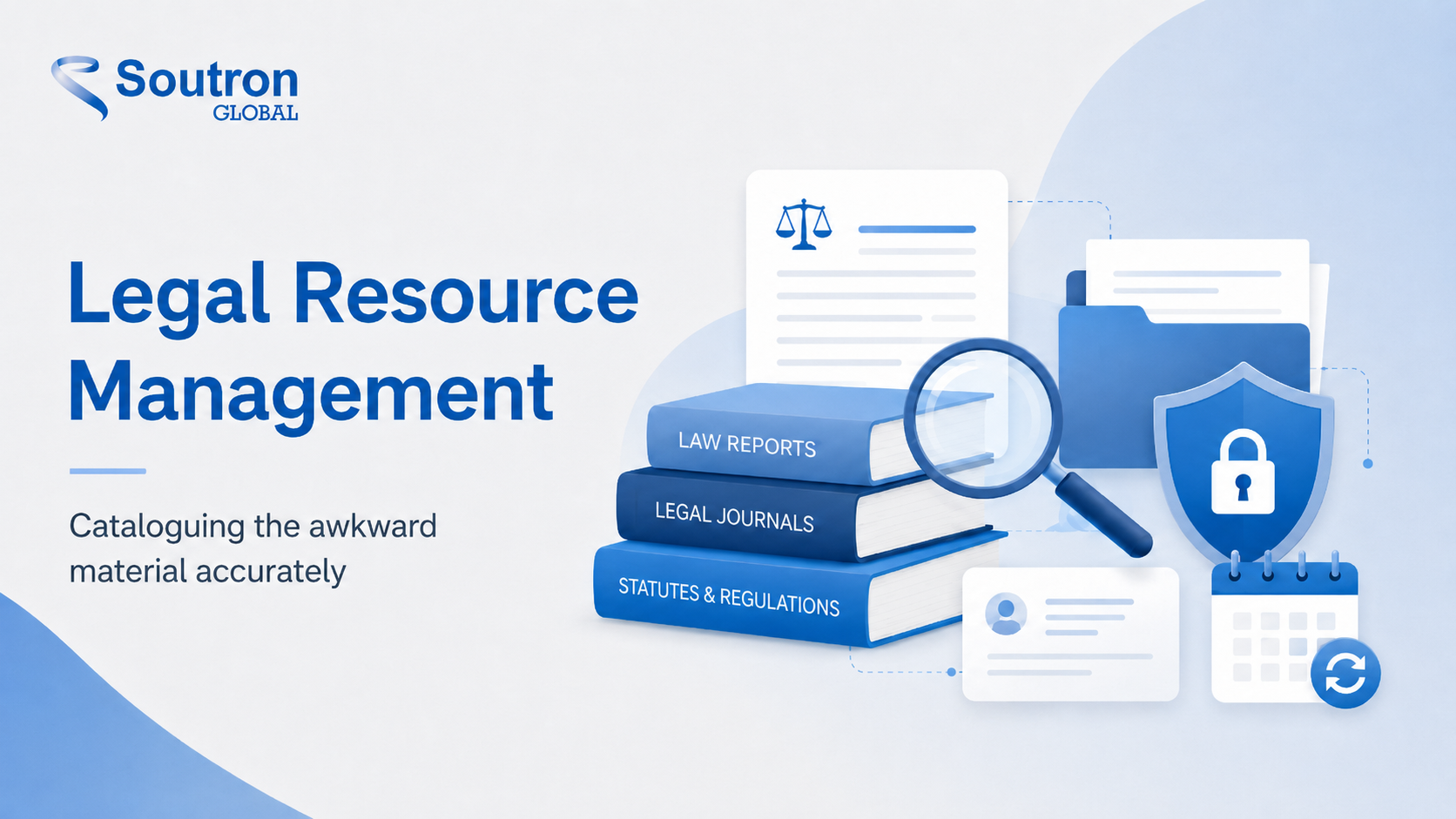
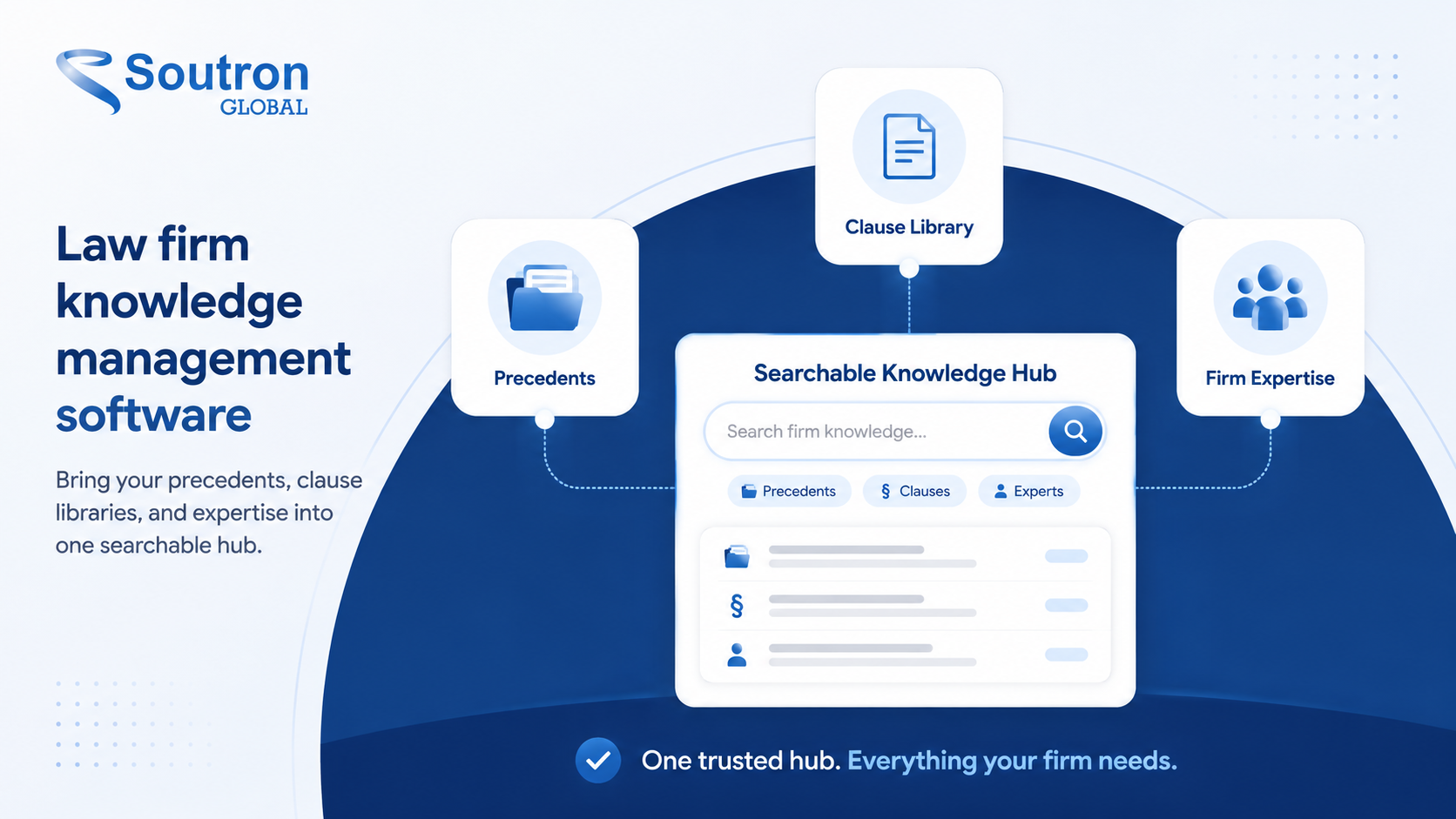
Legal Precedent Management

At its core, the discipline focuses on identifying valuable work product, refining it for reuse, and making it easy to retrieve when attorneys need it. A document created for one matter is not automatically a precedent. Creating a reusable precedent requires review, generalization, and de-identification so it is prepared for future use rather than tied to a specific client engagement.
This guide covers core features, deployment types, real-world examples, selection criteria, and future trends shaping library management. Whether you're a public librarian evaluating your first ILS, a corporate information manager modernizing a special library's trusted data, or an IT administrator comparing deployment options, this library software guide covers what you need to know.
In practice, AI conversational search and metadata-based e-discovery solve different problems. A curated, secure archive or library database using metadata tagging and faceted search helps users identify and access the right assets with precision, delivering what artificial intelligence search cannot, including the most architecturally advanced forms of AI retrieval available today.
Why Fund Libraries When You Can Use AI?
Library funding remains essential precisely because libraries serve roles that AI cannot replicate. While AI tools provide instant access to generated content, libraries offer curated expertise, authoritative collections and the institutional memory that organizations and communities depend on. More importantly, libraries help users navigate the AI age effectively — teaching critical evaluation skills, providing access to specialized AI tools and ensuring that technology serves people rather than replacing human judgment.
The AI Antidote: Who are are the Guardians of Truth in the Age of Hallucination?
Curated collections held in archives, libraries and museums, by contrast, are authoritative sources of knowledge, designed to connect people with verified information. These collections hold a unique position in this new landscape. Authoritative collections, whether legal briefs, proprietary research, corporate knowledge or historical archives are often stored securely in databases not available for ingestion by AI engines.
5 Ways Archives, Libraries and Museums Remain Essential in the Age of AI
In the AI era, archives, libraries and museums don’t compete with artificial intelligence; they complement it. By serving as guardians of verified knowledge, secure repositories, validators of AI content, providers of AI literacy and facilitators of specialized AI tools, these institutions deliver irreplaceable value that technology alone cannot match. The future belongs to those who combine the best of both worlds: leveraging AI’s capabilities while relying on the expertise, curation, and human judgment that only archives, libraries and museums can provide.