Reasons Integrated Library Management Systems Are Needed
Introduction to the Benefits of Integrated Library Management Systems
Understanding the benefits of library management systems is essential for librarians, administrators, and researchers who want to maximize the value and efficiency of their library operations. This article will cover the main benefits of library management systems, including automation, cost reduction, improved reporting, enhanced user experience, security, scalability, and mobile access. By exploring these advantages, readers will gain insight into how modern library management systems can transform library services, streamline workflows, and improve both staff and patron satisfaction.
What is an Integrated Library Management System?
A library management system is software that automates routine library tasks such as cataloging, circulation, and inventory management, allowing staff to focus on more meaningful activities. Modern library management systems can significantly reduce operational costs by automating repetitive tasks, improving inventory tracking to prevent lost materials, and enabling real-time updates and automatic fine calculations. This automation streamlines operations and enhances efficiency for library staff.
Why Understanding the Benefits Matters
For librarians and administrators, understanding the benefits of library management systems is crucial for making informed decisions about technology investments, resource allocation, and service improvements. Researchers and patrons also benefit from improved access, streamlined processes, and enhanced user experiences. Recognizing these advantages helps institutions stay competitive, meet accreditation requirements, and deliver superior library services.
Summary of Main Benefits of Integrated Library Management Systems
Below is a summary table highlighting the key benefits of library management systems:
| Benefit | Description |
|---|---|
| Automation | Automates cataloging, circulation, inventory, and fine calculations, reducing manual labor. |
| Cost Reduction | Lowers operational costs by streamlining workflows and reducing waste. |
| Improved Reporting | Provides dynamic, customizable reports for circulation, user activity, and resource usage. |
| Enhanced User Experience | Offers user-friendly online catalogs, real-time updates, and personalized account features. |
| Security | Protects sensitive data with industry-leading security measures and role-based permissions. |
| Scalability | Supports libraries of all sizes and types, from small institutions to large organizations. |
| Mobile Access | Enables users to access resources and manage accounts on the go. |
| IT Demands Reduction | Minimizes the need for in-house IT support through cloud hosting and automated updates. |
| Waste Reduction | Reduces paper use and streamlines inventory management through digitization. |
How Integrated Library Management Systems Work
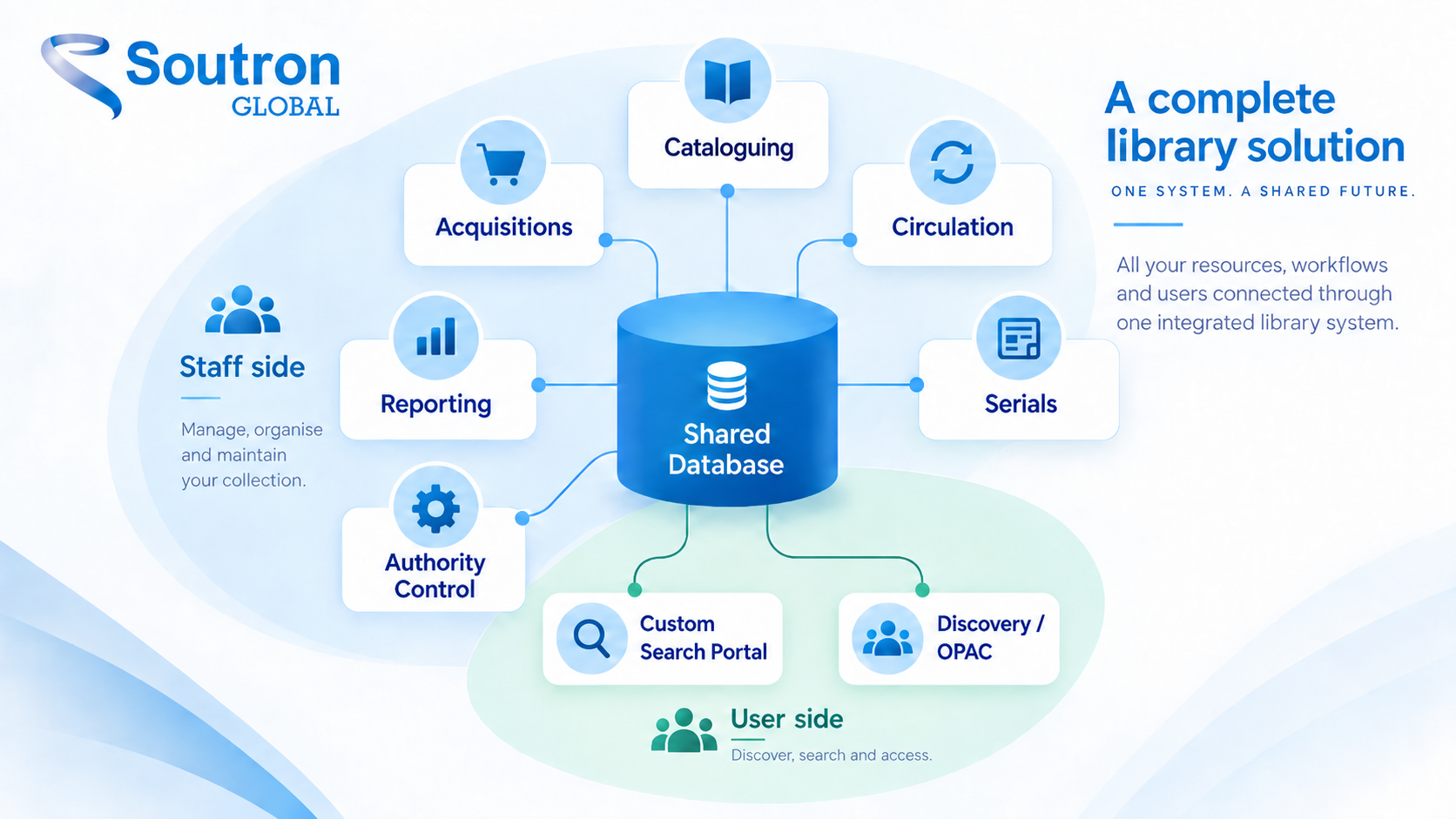
A modern library management system is an essential tool for day-to-day library operations, whether a library is completely digital, entirely physical, or a combination of both. These systems support centralized management of core functions, including:
- Facilitating loans and item checkouts
- Ordering and acquisitions
- Fund accounting
- Serials check-in and claims
- Cataloging specialized information
- Stock checks and inventory management
- Interlibrary loans
Library management software supports both physical resources and digital collections, including media content and other educational materials. Automation in libraries allows for real-time inventory updates and automatic fine calculations, which helps streamline operations and improve efficiency for library staff.
Modern Integrated Library Management Systems: Key Benefits
Automation and Operational Efficiency
Operational Efficiency
- Modern library management systems enable librarians to accomplish more with fewer workers and labor hours.
- Automation of routine tasks such as cataloging, circulation, and inventory management significantly reduces manual labor.
- Real-time inventory updates and automatic fine calculations streamline operations and improve efficiency for library staff.
Automation in Practice
- Staff can focus on more meaningful tasks rather than repetitive manual processes.
- Improved inventory tracking helps prevent lost materials and reduces the risk of errors.
In addition to improving efficiency, modern systems also enhance reporting capabilities.
Barcodes / RFID
Streamlined Asset Tracking
- Soutron’s Library Management System can generate and store barcodes to help library staff reduce manual labor in circulation and tracking.
- Libraries can offer researchers all the benefits of a metadata-rich index enhanced by logical hierarchical relationships between entries, without sacrificing the core library automation needed for routine tasks.
How Barcodes and RFID Work
- Barcodes are generated and attached to physical assets.
- RFID technology can be integrated to automate tracking and movement of materials.
- Staff scan items for check-in/check-out, reducing manual entry and errors.
- Automated tracking helps prevent loss and ensures accurate inventory.
Enhanced Security and Efficiency
- Teams can focus on more meaningful tasks and reduce the risk of materials falling into the wrong hands or getting lost.
In addition to streamlining asset tracking, modern systems also provide robust reporting features.
Better Library Management Reporting
Reporting Capabilities
- Analogue collection of management reports can be a massively labor-intensive task, making it hard to collect accurate data and circulation statistics.
- Soutron’s Library Management System enables administrators to generate management reports based on a variety of customizable parameters.
Types of Reports
- Circulation statistics
- Resource usage
- Patron interaction with materials
Decision Support
- These reports support better decision-making and more informed resource allocation.
- Soutron admin users have access to more than 180 established management report formats, ready to use and run at any time.
In addition to improved reporting, library management systems also help reduce internal IT demands.
SaaS-based Library Systems Reduce Internal IT Demands for Library Staff
IT Demands Reduction
- Institutions relying on legacy LMS platforms often struggle with hardware maintenance, software updates, and troubleshooting.
- Older setups can create security challenges and require significant in-house IT expertise.
Cloud Hosting Benefits
- Anywhere-anytime access is a major benefit of cloud-hosted library management systems.
- Cloud hosting keeps the platform accessible and secure while reducing exposure to data breaches.
- Reduces the need for in-house hardware and IT support, lowering infrastructure and operating costs.
Support Features
- Soutron clients benefit from easy-to-use Help Desk features, community pages, and a comprehensive knowledge base.
In addition to reducing IT demands, modern systems are also cost-effective and help reduce waste.
Cost Effective Library Solutions and Waste Reduction
Cost Effectiveness
- Paperless inventory management and reporting reduce waste, speed up workflows, and simplify record-keeping.
- Adoption of eBooks and digital libraries further reduces waste and environmental impact.
Waste Reduction
- Efficiency improvements eliminate inefficient busy work, such as manual inventory checks.
- Digitization and barcodes make inventory processes more efficient, saving hundreds of staff hours.
Financial Impact
- Labor savings lead to lower costs, allowing institutions to invest in inventory or service improvements.
In addition to cost savings, library management systems also enhance user convenience and satisfaction.
Library System Convenience and Satisfaction of End Users
User Convenience
- Libraries are designed to meet the specific needs of end users, whether in legal, healthcare, educational, or public settings.
- Advancements help users find what they’re seeking more quickly and identify relevant results.
Enhanced User Experience
- Hierarchical structures and relationships between records improve access to resources.
- Facet search filters and date sliders help narrow down results on screen.
- Features such as account access and borrowing history strengthen engagement and services.
Mobile Access
- Modern systems allow patrons to place holds, renew items, and pay fines online.
- Mobile accessibility enables users to access resources and manage accounts on the go.
The benefits of improved research and user engagement are difficult to quantify but are especially valuable for students and professionals.
Library System Security and Data Protection
Security Features
- Modern library management systems provide industry-leading security measures to protect sensitive data, including names, addresses, borrowing history, and payment details.
- Role-based permissions limit access to sensitive information, reducing the risk of unauthorized access.
Regular Updates
- Regular updates and maintenance address security vulnerabilities and ensure that user databases remain confidential and secure.
In addition to security, scalability ensures that library management systems can grow with your institution.
Library System Scalability and Flexibility
Scalability
- Modern library management systems support libraries of all sizes and types, from small institutions to large organizations.
- Flexible configurations allow institutions to diversify their offerings with digital media and meet accreditation requirements.
Learn More About Soutron’s Integrated Library Management System
Are you ready to see Soutron’s Library Management System in action? Request a demonstration and speak with our team about the many benefits of our digitized database solutions.